______ END ______
 |
| CIMdata - PLM Glossary | Reference | 2022 |
| Term: Digital Thread |  |
| Definition: A communication framework that connects data flows, which can be used to produce an integrated and holistic view of an asset’s data from physical and virtual systems (i.e., its Digital Twin) throughout its lifecycle across traditionally siloed functional perspectives. |
| Term: Digital Twin | |
| Definition: A digital twin is an integrated data-driven virtual representation of real-world entities and processes, with synchronized interaction at a specified frequency and fidelity. |
| Term: Digitalization | |
| Definition: The process of moving information from paper to digital forms (e.g., computer files, connected data elements representing a product, managing a configuration and all its dependencies). Basically, the process of changing from analog to digital form. |
| Term: Enterprise Resource Planning | ERP |
|
| Definition: A system that manages as-routed data and is the authoritative source for schedule, producer information, and cost. |
| Term: Enterprise Simulation Management | ESM |
|
| Definition: Integrates and manages simulation and analysis data and processes across the product development processes. ESM’s primary components include knowledge capture and replication and integrated simulation management. Also called Simulation Data Management or Simulation Lifecycle Management. |
| Term: Manufacturing Bill of Materials | mBOM |
|
| Definition: The manufacturing bill of materials reflects the manufacturing process of the product rather than the design of the product. mBOMs are typically driven by the eBOM and also include all items related to the end product, including packaging or shipping. |
| Term: Manufacturing Execution System | MES |
|
| Definition: A system that manages as-built manufacturing information and is the authoritative source for execution records, assembly records, non-conformance records, and dimensional inspection records. It most often captures real-time data. |
| Term: Manufacturing Resource Planning | MRP |
|
| Definition: A system that manages as-planned data and is the authoritative source for the mBOM, inventory, and equipment. |
| Term: Materials Requirements Planning | MRP |
|
| Definition: A methodology and system used to plan and manage manufacturing operations. The BOM for products released to manufacturing and the product routing definition are key parts of the MRP system’s database. |
| Term: Product Data Management | PDM |
|
| Definition: A system that manages as-designed data and is the authoritative source for the geometry, attributes, CAD BOM, and revision. | 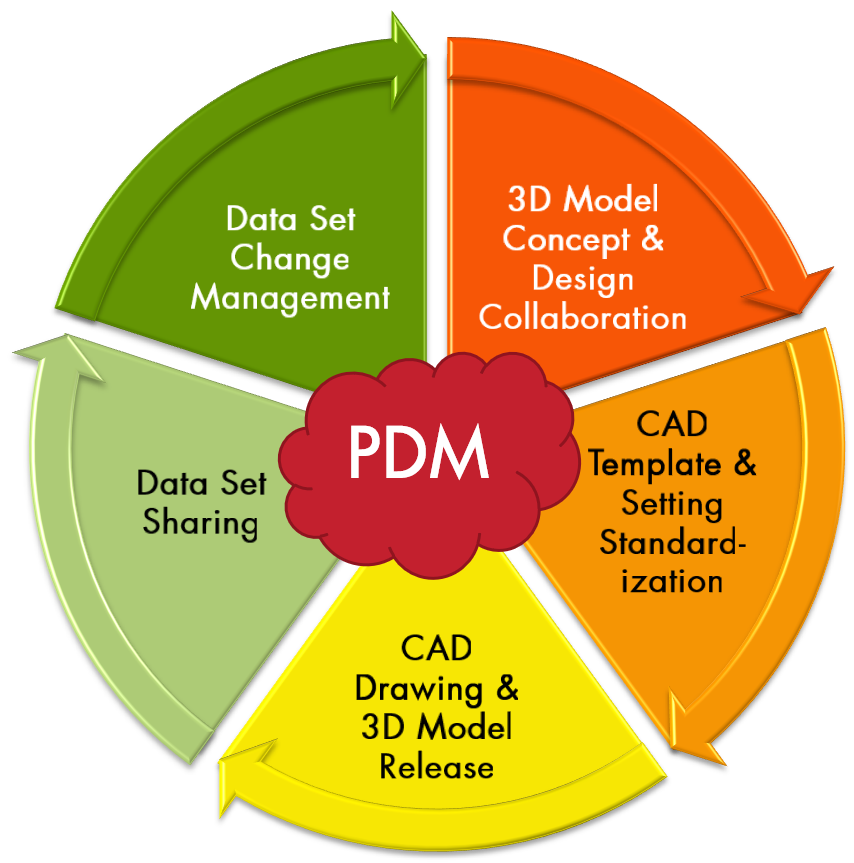 |
| Term: Product Lifecycle Management | PLM |
|
| Definition: A system that manages as-built design information and is the authoritative source for the eBOM, changes, data package, design deviations, and usage. | 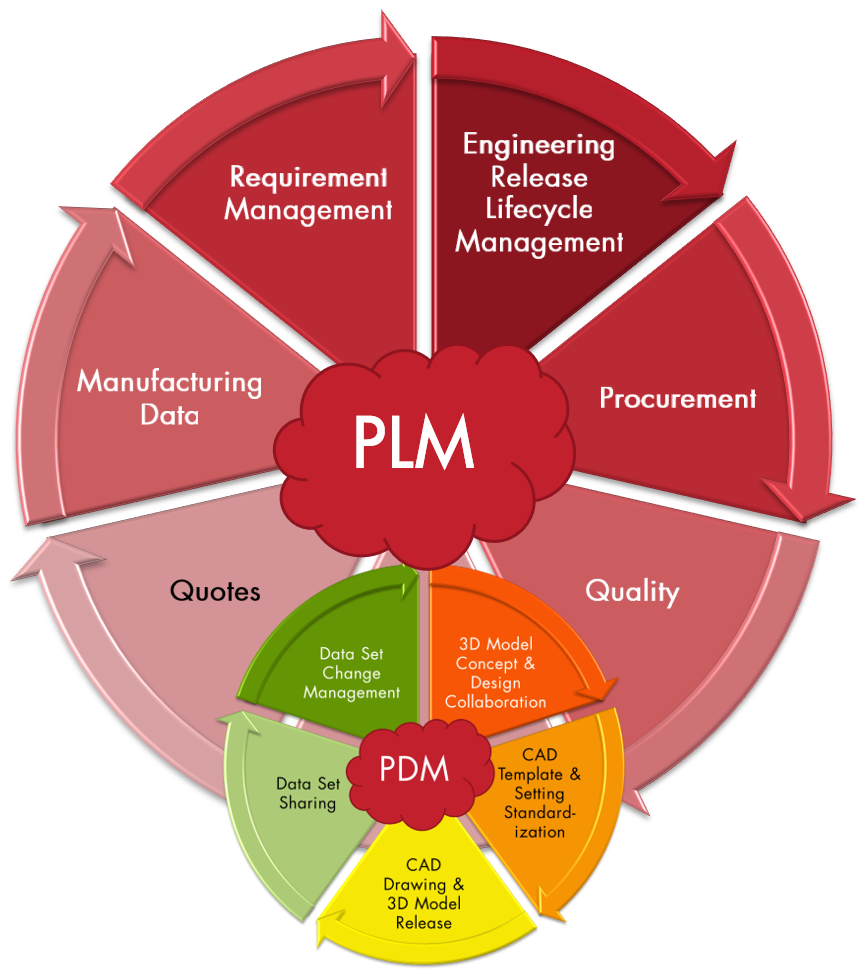 |
| Term: Quality Assurance | QA |
|
| Definition: A planned and systematic pattern of all actions necessary to provide confidence that adequate technical requirements are established, that products and services conform to established technical requirements, and that satisfactory performance is achieved. |
| Term: Requirements Management | |
| Definition: Gathering and managing user, business, technical, and functional requirements within a product development project. Four types of requirements must be considered: user requirements, business requirements, technical requirements, and process or operational requirements. |
| Term: Service Bill of Material | SBOM |
|
| Definition: The Service bill of material is the structure of the product, initially as it was built (the MBOM), but then modified as the product is installed and serviced in operation. |
| Term: Simulation & Analysis | |
| Definition: Modeling, exercising, and analyzing a design’s behavior without physically building the design. The simulator and simulation model have all the necessary attributes of the physical design. |